Parliament Slip: Preparing for the Future Mobility Network

PUBLISHED: December 19, 2025
In This Blog:
- Learn why a portion of Parliament Slip was lakefilled and how it supports the future mobility network across the waterfront and new homes at Quayside.
- See how vibro-compaction helps densify the lakefill to create a foundation for future roads, transit, and development.
- Discover the timelapse video and watch the transformation, step by step.
At the peak of marine shipping around the turn of the 20th century, Toronto’s waterfront was bustling with commercial activity. Growing demand for port facilities led to extensive lake filling and industrialization of the shoreline. The new inner harbour shoreline — from the Portland Slip in the west to the Port Lands in the east — was studded with marine terminal buildings and a series of ‘slips’, where ships would dock to unload their cargo. As the movement of goods changed and the city of Toronto evolved, many of these functions were no longer needed and the area became derelict and disconnected from the city.
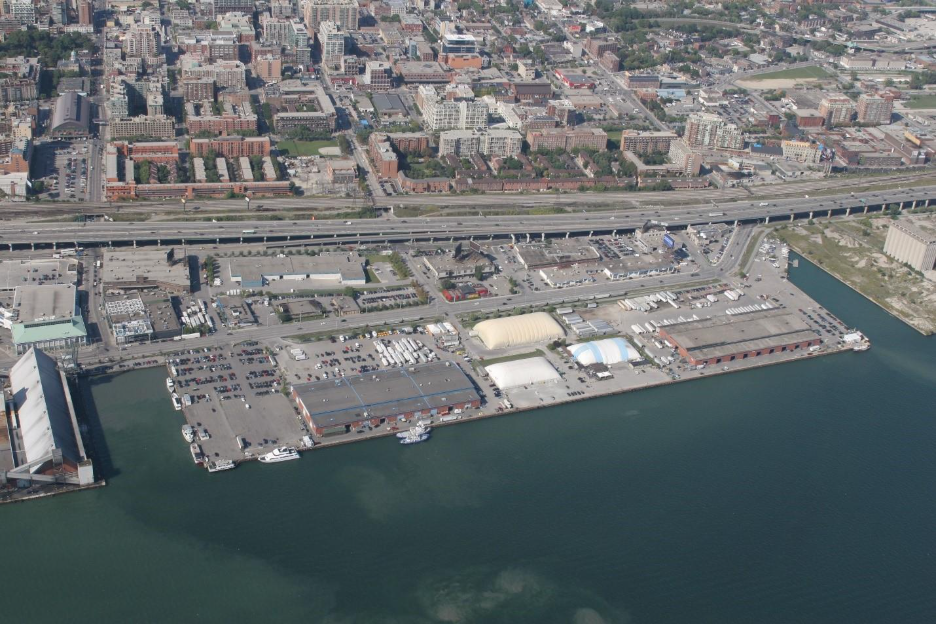
The post-industrial waterfront was lined with disused marine terminals, parking lots and a series of slips that once served the shipping industry. Shown above is East Bayfront, framed by Jarvis Slip on the left and Parliament Slip on the right, circa 2005.
Over the past two decades, considerable progress has been made transforming these lands into a vibrant and connected waterfront designed to draw people back to the water’s edge and create places for people to live, work, learn and play. As we move forward with the next phase of revitalization on the waterfront, we are getting to work delivering the infrastructure and public realm needed to support new homes and destinations, and the mobility networks needed to access these places.
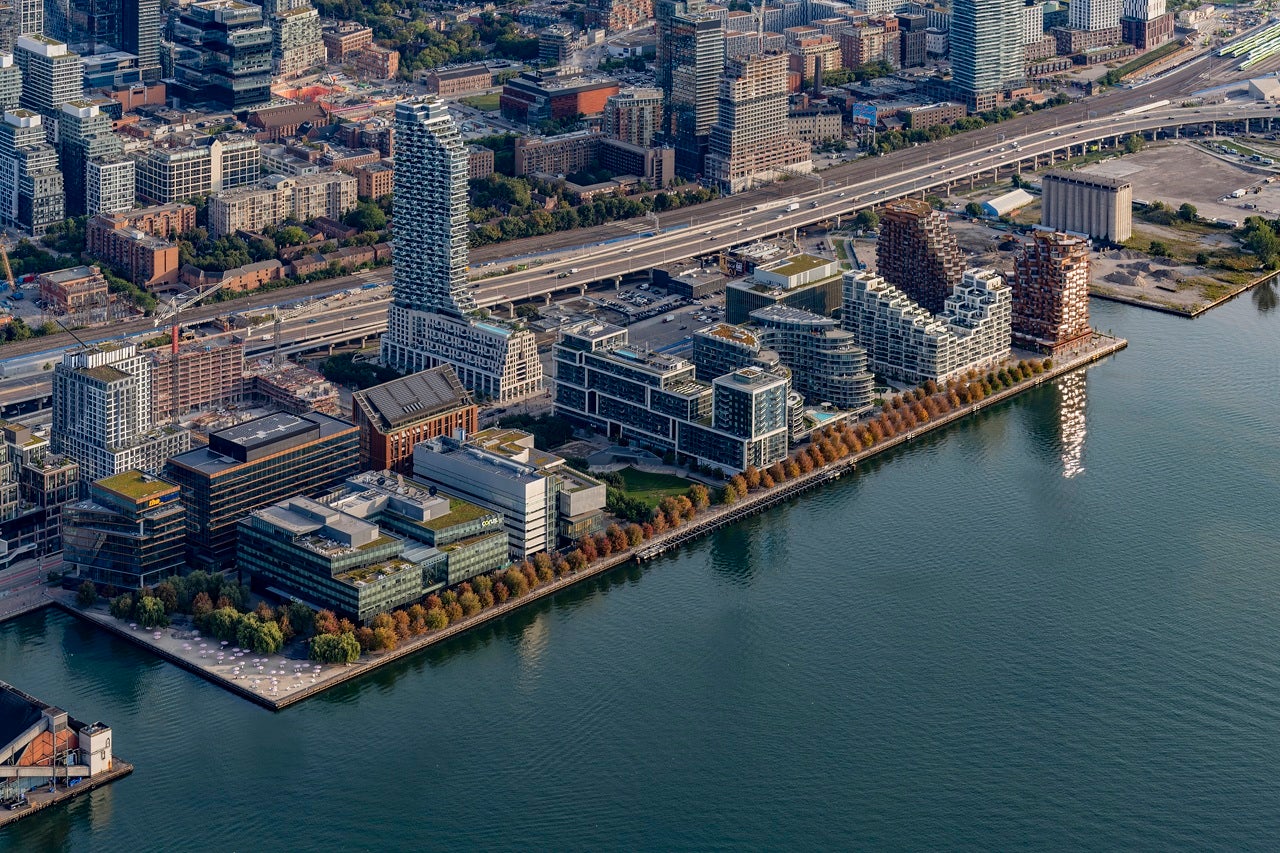
East Bayfront, framed by Jarvis Slip on the left and Parliament Slip on the right, is now home to residents, businesses, George Brown College, Sugar Beach and the Water’s Edge Promenade. (Photo taken September 2025).
Parliament Slip, located adjacent to where Queens Quay East meets Parliament Street, is an essential piece of this puzzle. A key feature of our work in this area is extending Queens Quay East and realigning Parliament Street. This will create one of the development blocks for new housing at Quayside and support the future mobility network and planned Waterfront East Transit that will extend along Queens Quay from Bay Street into Ookwemin Minising.
But before more progress can be made, lakefilling was needed at the head of the slip. Parliament Slip had an irregular shape, coming to an asymmetrical point at its tip. Beginning in 2024, work began filling in the head of the slip and building a new dockwall.
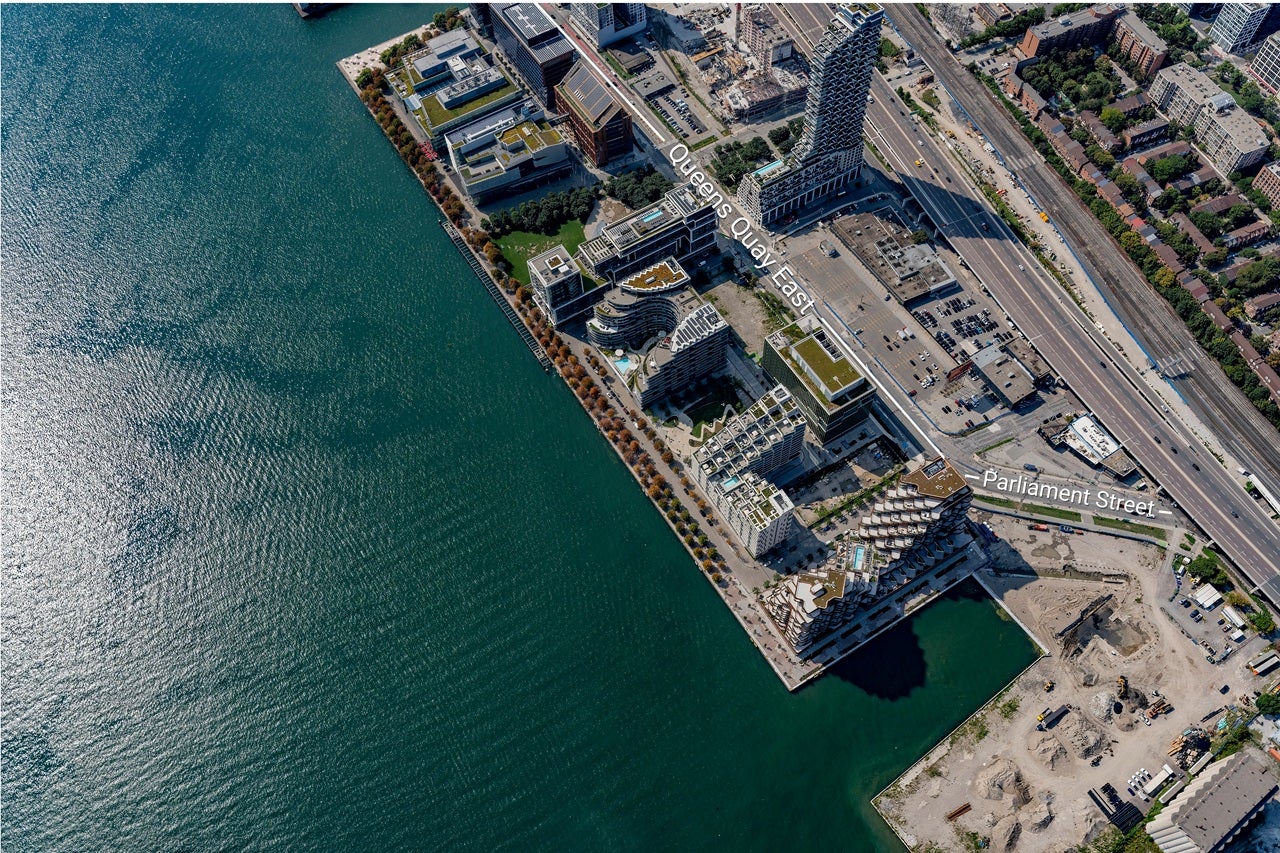
The outline of the former angled head of the slip is still visible in the image above. With the lakefill completed, it provides the foundation for the future extension of Queens Quay further to the east and the realignment of Parliament Street.
Filling the top portion of the slip enables the extension of Queens Quay East, ultimately to Cherry Street, and the realignment of Parliament Street. It establishes new, stable ground that not only provides the foundation for future phases at Quayside but also unlocks the transformation of the future mobility network across the eastern waterfront, supporting, the long-term vision for a more connected waterfront.
Engineering a Strong Foundation
Lakefilling involved placing clean material into the lake, paired with the construction of a new dock wall, which forms the strong edge between the lake and the newly created land.
A technique called vibro-compaction was used throughout this process. This involved controlled vibration to settle and densify loose soil, making it strong enough to support what will eventually be built above it. A long vibrating probe was lowered deep into the new landmass, shaking the soil into a tighter, more stable arrangement. As the probe moved upward, the soil became more uniform, helping ensure a durable surface.
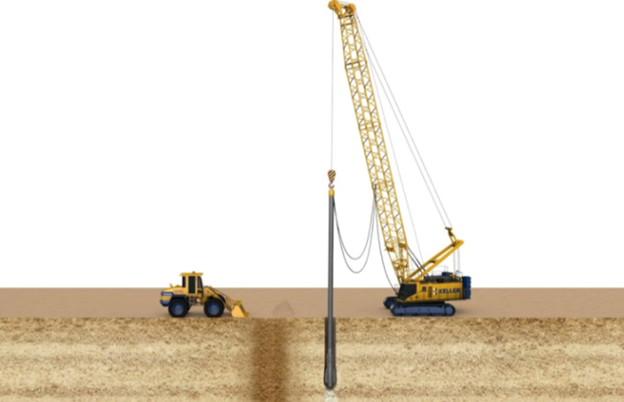
Vibro-compaction is a construction technique used to densify soil. A crawler crane with a specialized powerful vibrating probe called a vibroflot, similar to the image above, helps achieve this.
Watch our timelapse to see the transformation, step by step.
Rebuilding the Shoreline, Reviving the Ecosystem
In every project we deliver, we strive to create a lakeshore that supports a thriving city while sustaining healthy ecosystems.
Before construction began at Parliament Slip, the Toronto and Region Conservation Authority (TRCA) safely removed fish from the area and installed underwater curtains to control debris and sediment from moving into the inner harbour and to prevent fish from returning while work was underway.
We then improved conditions for aquatic life by removing contaminated sediment and poor‑quality habitat, and adding new rock berm and stones that provide foraging, shade, and spawning areas. These improvements contribute to our broader efforts across the waterfront restoring habitat. Water quality and habitat conditions have steadily improved in recent years, and TRCA continues to document a wider range of fish species returning to our shores - including the identification of an Atlantic Salmon in May 2025.
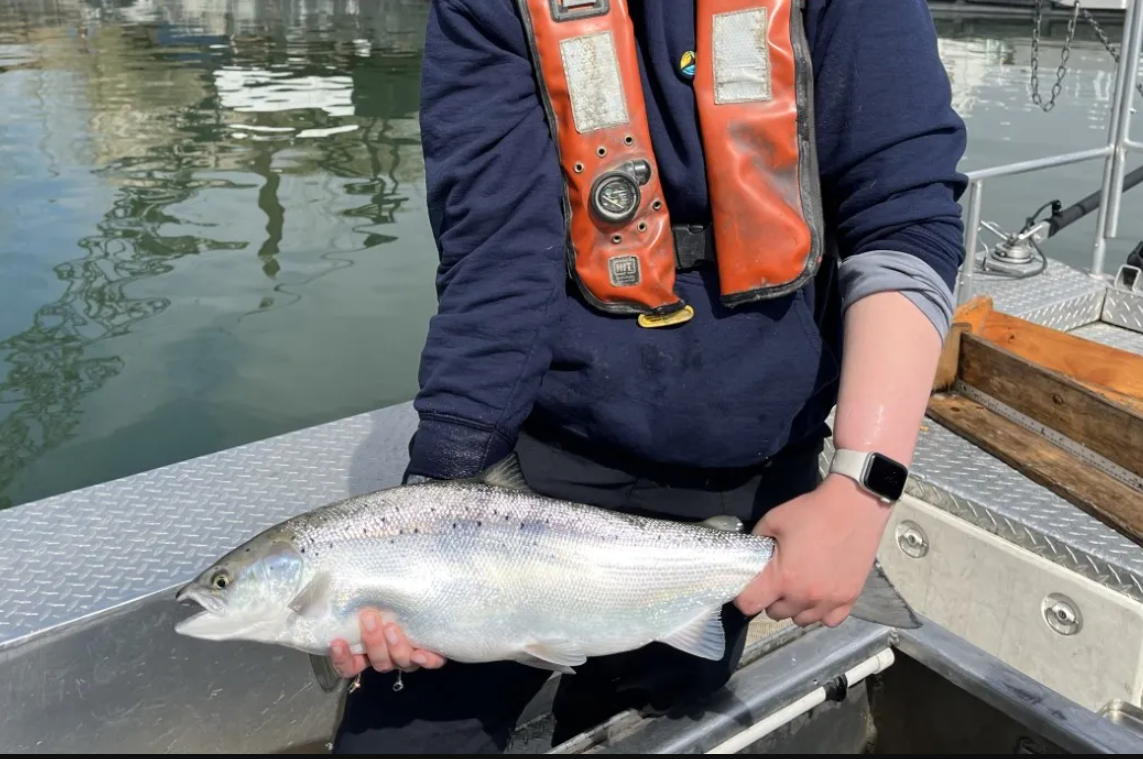
TRCA staff pictured with an Atlantic Salmon found in the inner harbour, May 2025.
Looking Ahead
Lakefilling is now finished although this area remains a hub of activity as work continues with a variety of activities, including ongoing surcharging to further compress the soil and early works related to installing services and utilities.
Stay up to date on project activities by signing up for our newsletter or following us on our social channels.