Keating Channel Pedestrian Bridge: A Striking Gateway Between Downtown and Toronto’s New Island

Rendering of the refined design for Keating Channel Pedestrian Bridge featuring the view from the south landing
PUBLISHED: February 25, 2026
The Keating Channel Pedestrian Bridge is anticipated to open in mid-2028. When complete, it will stand as a striking gateway to Toronto’s next chapter of waterfront revitalization, connecting downtown to the new island (Ookwemin Minising) and award-winning park (Biidaasige Park) in the Port Lands.
In 2024, Waterfront Toronto unveiled plans for this active transportation bridge. Today, that early vision has evolved into a final design for a culturally resonant landmark.
Its signature “S” shaped suspended arch bridge connected by an array of fanning cables evokes the sun’s path during solstices and equinoxes, creating a dynamic experience that changes with each step and season. This poetic form is shaped by Indigenous design principles and engagement with Indigenous communities.
To get to the final bridge design, Waterfront Toronto and the project team engaged key advisory bodies, including the Accessibility Advisory Committee, Community Advisory Committee, Design Review Panel, Indigenous communities and talking circle to gather feedback as the initial competition concept was advanced.
As this work was underway, deeper insights were gained into the costs, technical demands and delivery strategy required to construct the bridge in its unique waterfront location. These insights led the project team to engage Cherubini Metal Works, a trusted and experienced Canadian bridge fabricator, who worked with the designers, constructors and other stakeholders to further refine the design. The goal: consider an approach to materials, delivery, and installation to realize the competition-winning design vision in the most cost-effective way possible.
Working with Cherubini, the project team introduced three key refinements: resizing the deck width to four metres, removing the lookout points, and adjusting the bridge orientation to be perpendicular to the channel instead of crossing on an angle. These changes shortened the total bridge length and reduced the amount of steel required by 25%, and vastly simplified transportation and installation by allowing the bridge to be delivered in one piece by barge along the St. Lawrence Seaway. This transportation method follows the same approach as the new bridges installed in the Port Lands (check out our YouTube video), supporting the project’s sustainability goals.
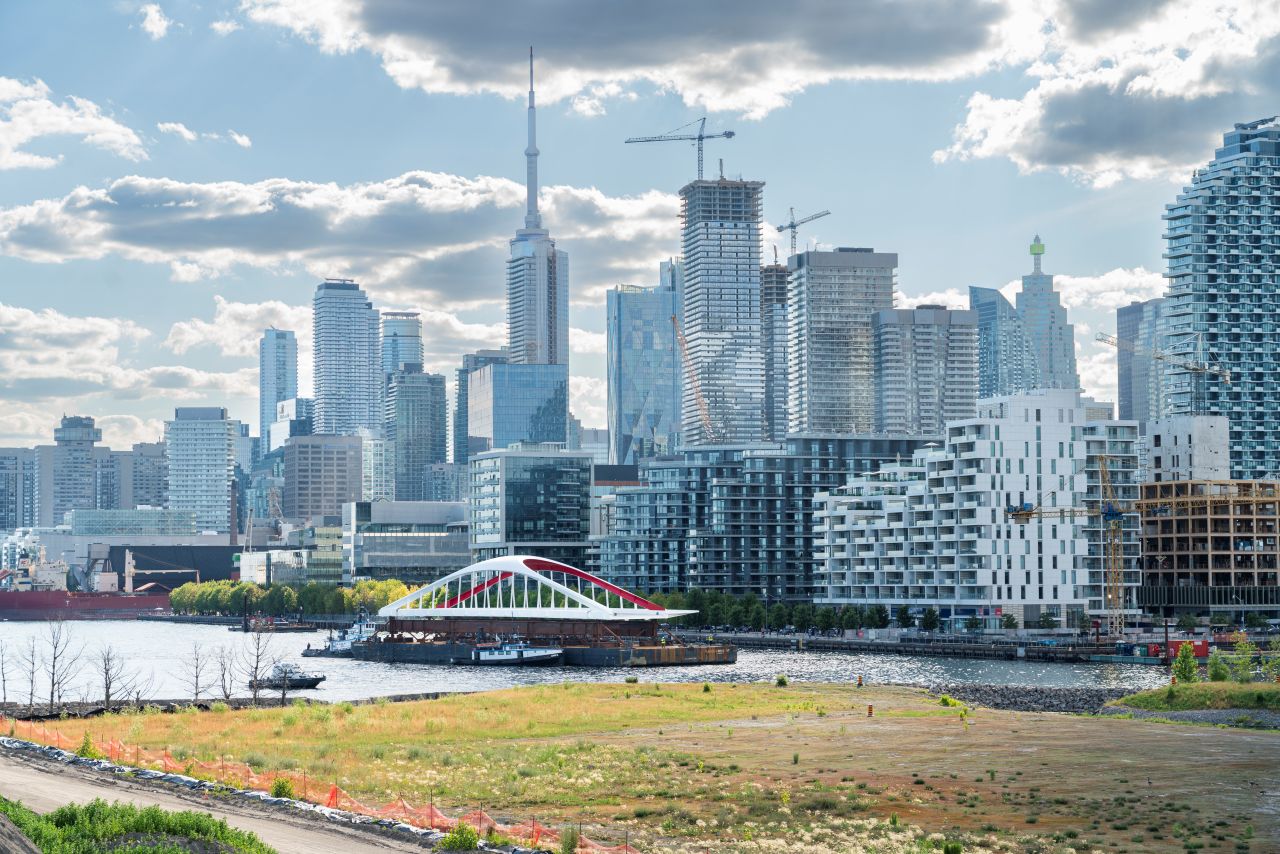
Cherry Street Bridge floated into its permanent location in the Port Lands as part of the Port Lands Flood Protection project work
Proudly Canadian, the bridge is being crafted with Algoma steel from Northern Ontario, fabricated by Cherubini in Nova Scotia, and shaped by Indigenous placekeeping traditions that reflect collaboration and care, ensuring the bridge is both technically sound and culturally resonant.

Left: rendered perspective of the bridge at the design competition stage in July 2023; Right: rendered perspective of the bridge following design assist stage in February 2026
The bridge will be a striking gateway that complements the nearby Port Lands bridges and provides a vital active transportation connection between Quayside and Ookwemin Minising. Ecological features, including new fish habitat, as well as low-carbon steel fabricated within Ontario, help advance the project’s sustainability goals. Prominent Indigenous design features, including the overhead archway inspired by solstice sun paths, constellations inscribed in the windbreak, marker trees and interpretive signage that support traditional wayfinding, all add to the unique character and quality of place.
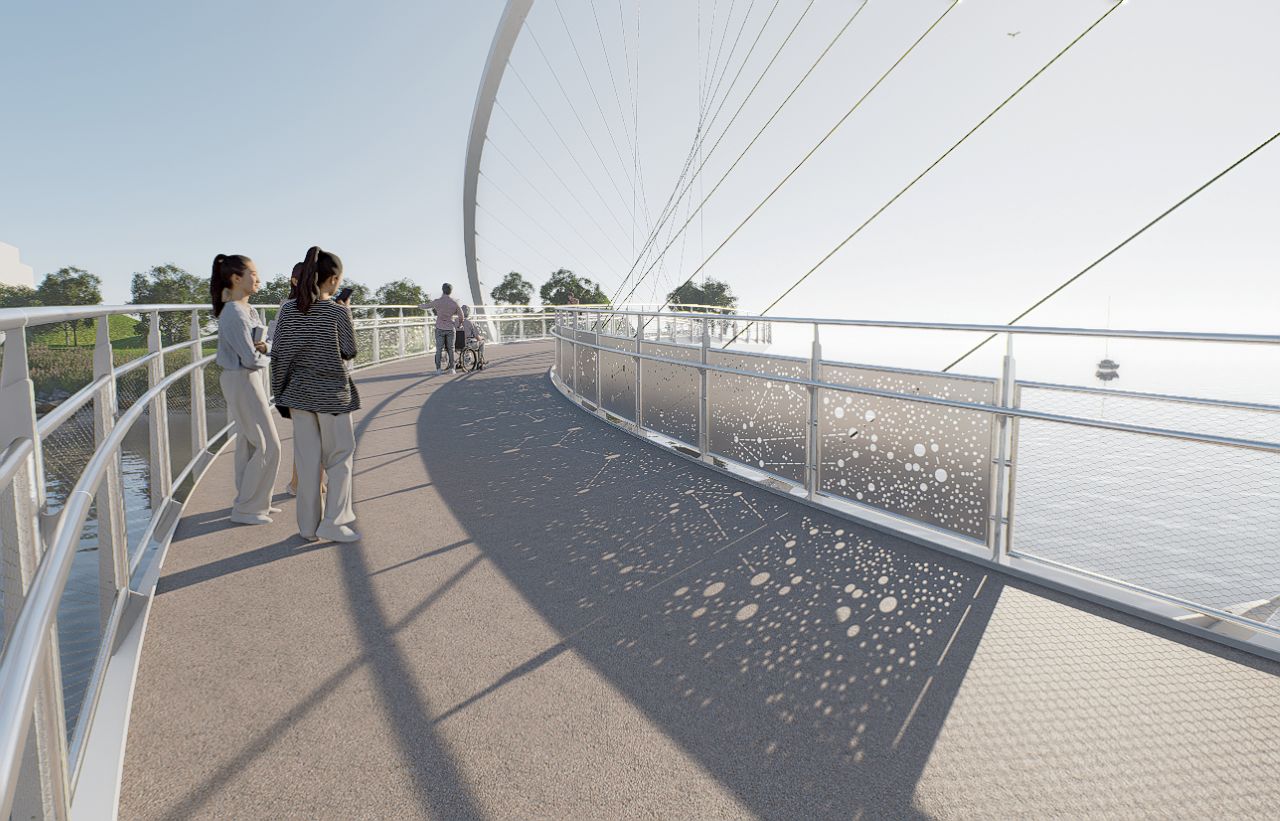
Metal wind break inscribed with constellations inspired by Indigenous cosmologies
As design nears completion, the project team is finalizing construction strategies and coordinating with projects on the two landing sites—the new stretch of Water’s Edge Promenade at Quayside and Biidaasige Park North, the landing place for this bridge on Ookwemin Minising.
Work is already underway on the north landing to reinforce the dock wall that will support the future bridge connection. This spring, foundational work will begin on the south landing, while early bridge fabrication gets underway off-site at Cherubini Metal Works in Nova Scotia. Together, these coordinated efforts will help prepare the site for the bridge’s next phase of construction.
Stay up to date on project activities by signing up for our newsletter or following us on our social channels.